Why self-examination matters
NHS screening only takes place every three years. Breast cancer can develop between appointments. Regular self-examination means you are more likely to notice a change early, when treatment is most effective.
The TLC method
- TOUCH: Using the flat of your fingers, gently feel your entire breast, armpit and collarbone area. Feel for any new lump, thickening or area that feels different from the rest. You can do this lying down, standing, or in the shower.
- LOOK: Stand in front of a mirror with your arms by your sides, then raised above your head. Look for any change in size, shape or contour; any skin changes (dimpling, puckering, redness, "orange peel" texture); any nipple changes (inversion, discharge, rash).
- CHECK: If you notice anything new or unusual, see your GP promptly — do not wait. Most changes are not cancer, but only a doctor can confirm this.
How often should you check?
There is no evidence that a strict monthly routine is necessary. The NHS recommends simply being "breast aware" — incorporating regular checking into your normal routine, for example in the shower or when getting dressed. Premenopausal women may find it easiest to check at the same point in their menstrual cycle each time, when breasts are least tender (usually a week after a period).
What is normal?
Most women's breasts are not identical. Some degree of lumpiness is normal, particularly in the week before a period. What you are looking for is anything NEW or CHANGED from what is normal for you. If in doubt, see your GP.
Breast changes to get checked
Changes can look different on different skin tones. Contact a GP, or your doctor if you live outside the UK, about any change that is new or unusual for you. Most changes are not cancer.
-
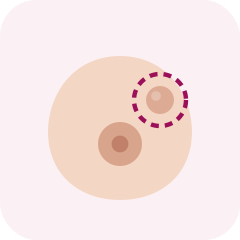
A lump or thickeningA new lump or thickened area in the breast, chest or armpit, even if it is painless. -
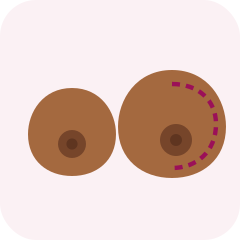
A change in size or shapeOne breast or side of the chest looks or feels different in size, outline or shape. -
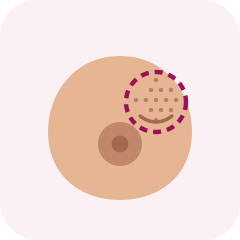
Dimpling or puckeringSkin that dimples, puckers or looks like orange peel. -
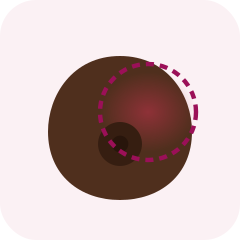
Redness or a colour changeNew redness, darkening or discolouration. On darker skin this may look purple or darker rather than red. -
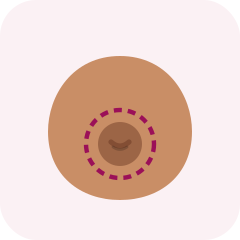
A nipple turning inwardsA nipple that has recently become pulled in or changed position. -
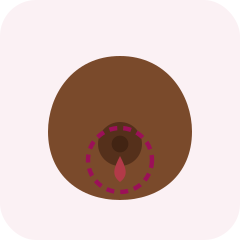
Nipple dischargeFluid from the nipple when you are not pregnant or breastfeeding, especially if it contains blood. -
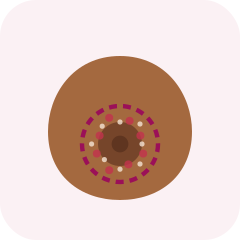
A rash or crustingA rash, crusting or scaly skin on or around the nipple. -
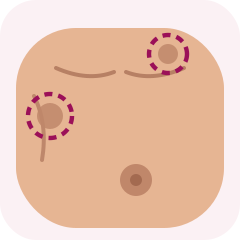
Swelling in the armpit or near the collarboneA lump or swelling in your armpit or around your collarbone.
Illustrations are simplified drawings, not medical images. Based on the NHS list of breast cancer symptoms.
Frequently asked questions
How do I check my breasts for cancer?
How often should I check my breasts?
What does a normal breast feel like?
Sources and further reading
- NHS: how to check your breasts or chest
- NHS: symptoms of breast cancer in women
- NHS: breast lump
- NHS: why breast screening is done
- WHO: breast cancer fact sheet
This content is for educational purposes and does not constitute medical advice. Always consult a qualified healthcare professional for personal medical guidance. Source links do not imply endorsement by the NHS or another organisation. See our editorial policy.